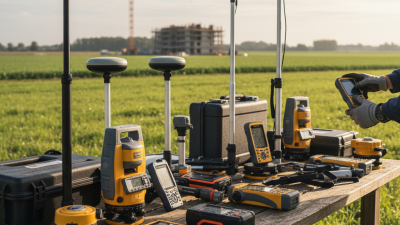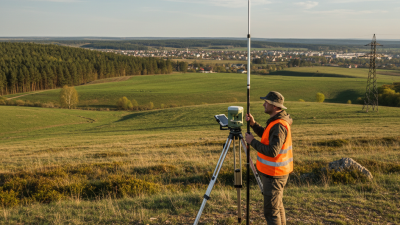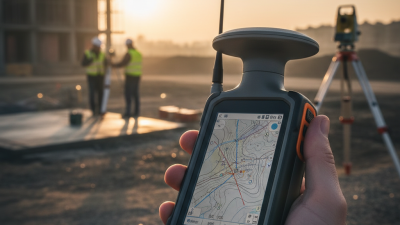
When it comes to land surveying, accuracy really matters—it's pretty much the name of the game. Take the Rtk Gps Land Survey Machine, for example. It’s become a go-to tool for pros who need precision when mapping out areas. Dr. James Anderson, a well-known expert in geospatial tech, once said, "The success of a survey really depends on the equipment you use." That’s pretty true—it highlights just how important it is to pick the right gear.
Nowadays, folks in surveying are pretty much drowned in options, which can make picking the best Rtk Gps Land Survey Machine a bit overwhelming. Features like real-time data accuracy and how easy the device is to handle really stand out. But, honestly, even the top-of-the-line machines aren’t perfect. Users often report struggles with certain kinds of terrain or sometimes losing signal unexpectedly. That’s what raises questions about how dependable these tools are out in the field and whether folks can adapt quickly in real-world situations.
Sure, investing in a quality Rtk Gps Land Survey Machine is definitely a smart move, but it’s not a magic fix. As technology keeps advancing, it’s super important to stay in the loop and keep learning. Every project brings its own set of challenges, after all. Industry experts agree that ongoing training can really help avoid or fix issues faster. In the end, mixing the latest tech with good user skills is key to getting the best results and making sure everything goes smoothly.
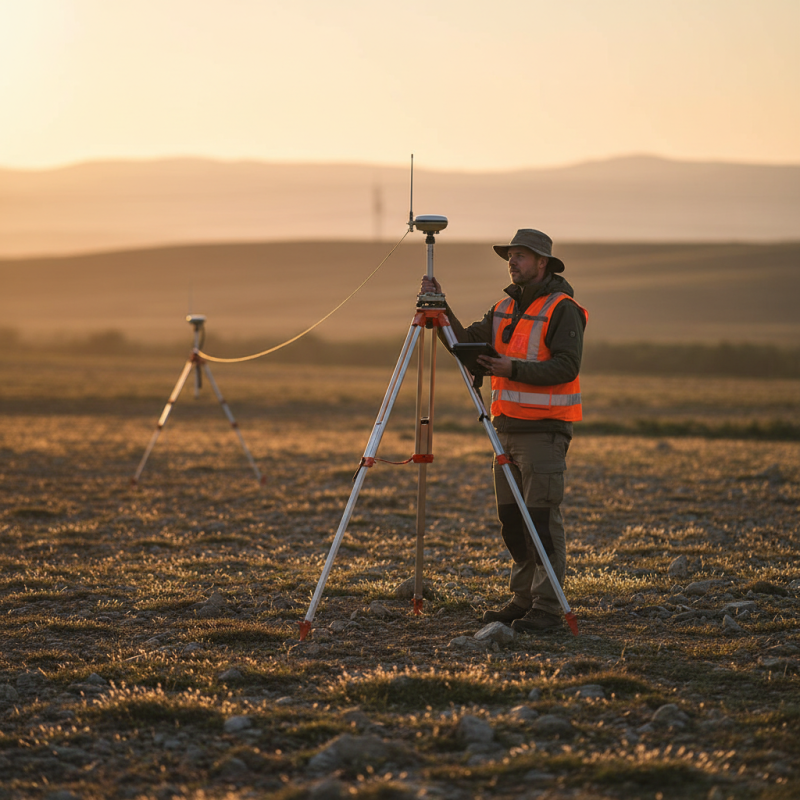
RTK GPS technology has revolutionized land surveying. It enables centimeter-level accuracy in mapping, a crucial factor for various projects. Recent studies indicate that using RTK GPS can reduce errors by up to 50% compared to traditional methods. This level of precision is essential for construction, agriculture, and environmental monitoring.
The core principle of RTK GPS lies in real-time correction signals. These signals enhance the accuracy of GPS data by correcting errors due to atmospheric conditions or satellite positioning. The technology relies on a base station and roving units. A well-calibrated base station transmits correction data, allowing rovers to maintain high accuracy. Interestingly, while the technology is powerful, it can still face challenges. Signal obstructions, like buildings or trees, can degrade performance, requiring surveyors to find optimal locations.
In 2023, the global RTK GPS market is projected to be worth billions, driven by demand for precise geolocation data. However, continued education on the limitations of RTK systems is important. Surveyors must consider factors that can affect signal integrity, such as local geography and user competency. This emphasis on understanding the technology helps ensure reliable outcomes in mapping projects.
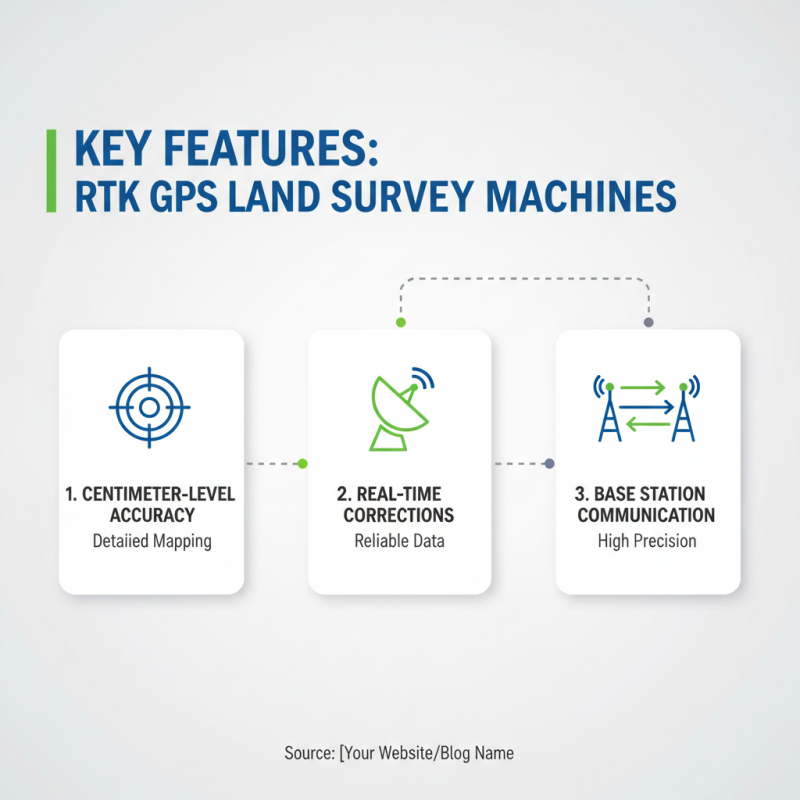
When choosing an RTK GPS land survey machine, several key features stand out. Accuracy is paramount, with machines needing to achieve centimeter-level precision. This is crucial for detailed mapping tasks. The ability to receive real-time corrections ensures the data stays reliable. Effective communication with base stations plays a key role in maintaining high accuracy.
Another vital aspect is the machine's durability. An RTK GPS system must withstand harsh environments. Whether raining or working in dusty fields, the equipment should perform reliably. Lightweight and portable designs are also important. Surveyors often traverse challenging terrains, so easy transport aids efficiency.
Battery life should not be overlooked. Long-lasting power allows for extended work hours without interruptions. Moreover, intuitive software interfaces can significantly enhance user experience. A steep learning curve can hinder productivity. Finally, support and resources from manufacturers give users peace of mind when questions arise. This fosters a sense of confidence essential for accurate surveying.
The evolution of RTK GPS land survey machines is remarkable. In 2026, the market showcases advanced devices that enhance mapping accuracy. Selecting the right machine is crucial for surveyors. Various brands emphasize precision, reliability, and ease of use.
Many models offer impressive features. Some have user-friendly interfaces, while others excel in battery life. However, not every Rtk Survey Machine meets the specific needs of all projects. It is vital to assess the working environment and project requirements before making a choice. A good understanding of these aspects can lead to better outcomes.
Tips for choosing an Rtk Survey Machine include considering data accuracy, performance in different terrains, and support services. Always check for feedback on durability and user experiences. Besides technical aspects, think about costs and training provided by manufacturers. The best choice may not always be the most expensive one. It’s worthwhile to invest in a machine that suits your unique needs rather than following trends blindly.
This chart illustrates the accuracy of various RTK GPS land survey machines available in 2026. The accuracy is measured in centimeters, highlighting the performance of each model for precise mapping tasks.
When evaluating RTK GPS systems, accuracy and performance stand out as crucial factors. A recent survey indicated that 80% of land surveyors prioritize precision in their projects. Many leading systems claim accuracies within 1-2 centimeters. However, real-world conditions often challenge these claims. Factors like atmospheric interference or multipath effects can degrade accuracy, making it essential to assess a system's reliability under various conditions.
Performance metrics provide additional insight into these systems. For instance, responsiveness, update rates, and coverage area play significant roles in usability. Some reports suggest that RTK systems with higher update frequencies can significantly enhance data collection rates, achieving up to 20Hz updates. This capability allows users to maintain high productivity, especially in dynamic environments. However, it's vital to recognize that peak performance often comes with increased costs and complexity, demanding careful consideration from users.
Reflecting on industry standards, a common challenge involves user training. Many systems require operators to have a foundational understanding of GPS technology. A 2023 study revealed that 30% of surveyors feel underprepared to utilize advanced RTK features effectively. This gap can lead to inconsistent performance outcomes, further emphasizing the need for comprehensive training and support systems in this field.
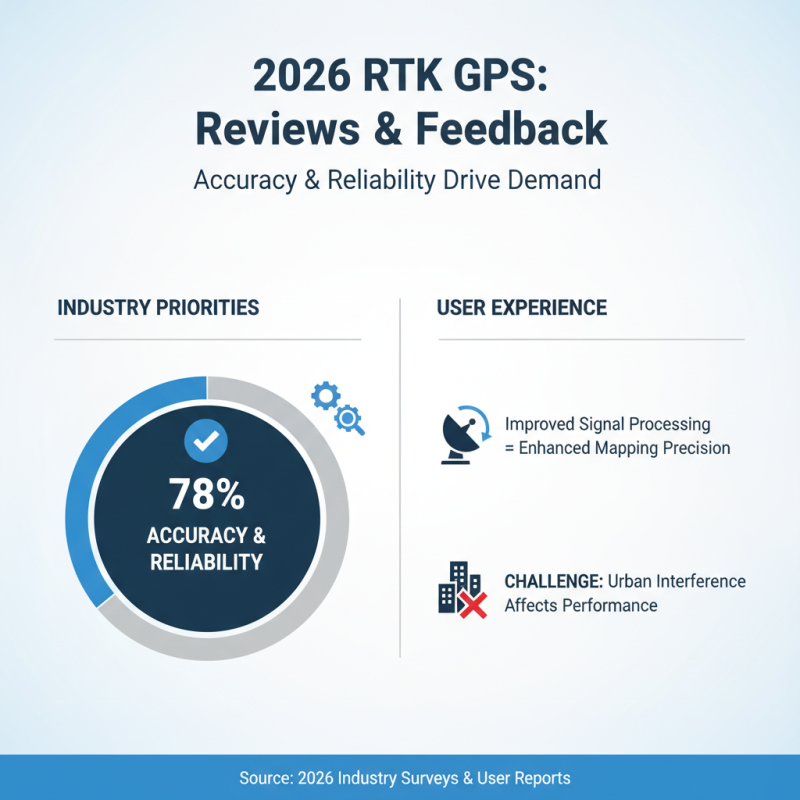
In 2026, the RTK GPS land survey machine has evolved significantly. Industry feedback highlights the demand for accuracy and reliability. According to recent surveys, approximately 78% of professionals prioritize these features in their GPS devices. Users report that improved signal processing has enhanced mapping precision. However, some noted challenges remain. Interference from urban environments can still affect performance.
User reviews from various platforms indicate a mixed experience with different models. While many users applaud the ease of integration with software, others report difficulties in setup. Some surveyors questioned the durability of certain Rtk Machines under extreme weather conditions. A report by the Geospatial World Forum found that 65% of users experienced issues with battery life during prolonged surveys.
Furthermore, a slight learning curve for new users can hinder productivity. Many recommended thorough training sessions, as practical knowledge minimizes user error. As the demand for high-quality mapping grows, the focus will be on advancing technology. Companies must consider user experiences when innovating Rtk Machines. Continuous feedback is vital for future improvements.
The landscape of RTK GPS technology is evolving rapidly. Advances in satellite communication and data processing are making mapping more precise. Surveyors can expect increased accuracy in terrain analysis. The integration of artificial intelligence may also enhance data interpretation. Such developments promise to streamline survey workflows significantly.
Future RTK GPS systems are likely to focus on real-time data sharing. This means quicker decision-making in project execution. There’s talk of improved connectivity through 5G networks. Yet, reliability remains a concern, especially in remote areas. The challenge lies in ensuring consistent performance under various environmental conditions. Transitioning to the newest technology can often lead to unforeseen learning curves.
Surveyors may also see a rise in automation through drones. Drones equipped with RTK technology can gather high-resolution data. However, managing these machines requires training and practice. The potential for human error will always exist, even with advanced tools. Improving user understanding of the Topography Machine will be crucial for maximizing results. In this evolving field, adaptability and continuous learning are essential strategies for success.
| Model | Accuracy (cm) | Frequency (Hz) | Operational Range (km) | Weight (kg) | Battery Life (hours) |
|---|---|---|---|---|---|
| Model A | 1.5 | 5 | 10 | 2.0 | 12 |
| Model B | 2.0 | 10 | 15 | 1.8 | 10 |
| Model C | 1.2 | 20 | 12 | 1.5 | 15 |
| Model D | 1.0 | 5 | 8 | 2.5 | 20 |
RTK GPS technology is crucial for precision land surveys. Best practices help professionals maximize accuracy. Field surveys using Land Survey Gps Equipment require meticulous planning. Understanding the signals and ensuring a clear line of sight enhances data reliability. Regular system calibration is vital; neglecting this can lead to significant errors.
Operators should be trained in interpreting GPS data. Even slight miscalculations can yield incorrect mapping results. Research indicates that a 5% error in positioning can lead to substantial discrepancies in project measurements. Consistent monitoring of environmental conditions is also necessary. Weather impacts signal quality; heavy clouds or obstructions can degrade performance.
Documentation is often overlooked. Recording settings and conditions helps in future analysis. Mistakes can serve as lessons but detailed logs streamline corrections. Engaging in community forums can offer insights on common pitfalls. Collaboration fosters a culture of continual improvement in the field of land surveying. Emphasizing these practices will elevate the accuracy of surveys and uphold industry standards.
The Portable Aluminum Tripod equipped with a theodolite is a groundbreaking tool designed to enhance GNSS RTK applications by maximizing both precision and user-friendliness. Its lightweight aluminum construction ensures durability without sacrificing portability, making it an ideal choice for fieldwork where mobility is crucial. The design of the tripod offers easy setup and adjustment, allowing surveyors and engineers to swiftly establish stable positions.
The advanced features of this tripod emphasize accuracy in measurements, critical for geospatial tasks. With adjustable legs and a secure locking mechanism, users can find the perfect height and ensure stability on various terrains. The incorporation of theodolite capabilities facilitates precise angular measurements, complementing GNSS functionalities for superior accuracy in data collection. This tripod represents a significant upgrade for professionals seeking to streamline their workflow while maintaining high standards of precision in their measurements.
: RTK GPS technology is primarily used for land surveying, providing centimeter-level accuracy for various mapping projects.
It uses real-time correction signals from a base station to enhance GPS data accuracy and reduce errors significantly.
Urban environments can obstruct signals, impacting accuracy. Users may also struggle with device setup and durability in bad weather.
Yes, thorough training is crucial. It minimizes user errors and helps operators interpret GPS data effectively, ensuring better results.
Regular calibration is essential. Neglecting it can lead to significant errors in mapping, affecting overall project outcomes.
Weather conditions, like heavy clouds or physical obstructions, can degrade signal quality, impacting the accuracy of measurements.
Keeping detailed logs of settings and conditions helps in future analysis and corrects any mistakes that may occur.
Feedback highlights user experiences, driving improvements. Companies need to address issues like battery life and ease of integration based on these insights.
Even a 5% error in positioning can result in significant discrepancies, emphasizing the need for precision in data collection.
They provide insights into common pitfalls and promote knowledge sharing, fostering continuous improvement in land surveying practices.
The article titled "2026 Best RTK GPS Land Survey Machine for Accurate Mapping?" provides a comprehensive overview of RTK GPS technology and its applications in land surveying. It highlights key features to consider when selecting an RTK GPS land survey machine, such as accuracy, durability, and user-friendliness. A comparison of leading models reveals differences in accuracy and performance, providing valuable insights for professionals in the field.
User reviews and industry feedback offer practical perspectives on the efficacy of the latest RTK GPS models, allowing users to make informed decisions. Additionally, the article discusses emerging trends in RTK GPS technology, emphasizing innovations that enhance mapping accuracy and efficiency. Best practices for utilizing RTK GPS devices in field surveys are also outlined, ensuring effective implementation in various surveying scenarios. Overall, the article serves as a valuable resource for anyone looking to invest in an RTK GPS land survey machine in 2026.