
Leave Your Message
In the rapidly evolving landscape of geospatial technology, precision tracking has become paramount, facilitating advancements in various sectors including agriculture, construction, and environmental monitoring. According to leading industry reports, the global market for GNSS and GPS technology is projected to reach USD 90 billion by 2025, driven by increasing demand for enhanced location-based services. Within this context, Antenas Rtk Gps have emerged as a critical tool for achieving centimeter-level accuracy in positioning. Companies like Shanghai Apekstool (APEKS) are at the forefront of this innovation, providing cutting-edge geospatial surveying and mapping products tailored to meet the growing needs of professionals worldwide. With a focus on reliability and customized solutions, APEKS is committed to equipping users with the technology necessary for superior data collection and analysis, ensuring they stay ahead in this competitive field.

 The evolution of RTK GPS technology is a remarkable journey reflecting advancements in precision tracking. Initially, GPS systems offered general location data, but with the advent of Real-Time Kinematic (RTK) technology, accuracy surged to centimeter levels. This transformation not only improved navigation for various industries but also set a new standard for surveying, agriculture, and autonomous vehicles. As technology evolves, the integration of advanced antennas plays a crucial role. These antennas not only enhance signal quality but also streamline data collection processes, making precision tracking more reliable than ever.
In recent years, the development of RTK technology has evolved alongside the growing demand for precise location services. With applications ranging from mapping to robotic navigation, businesses increasingly rely on RTK GPS systems to gain a competitive edge. As experts refine these technologies, the fusion of hardware and software will continue to drive innovation, pushing boundaries and expanding possibilities in the field of precision tracking. The path forward promises even more sophisticated systems, capable of overcoming challenges related to signal interference and environmental variables. The future of RTK GPS clearly signifies a transformative era in tracking technologies.
: RTK GPS (Real-Time Kinematic GPS) technology enhances traditional GPS systems by providing centimeter-level accuracy for various applications, significantly improving navigation and tracking.
Initially offering general location data, RTK GPS technology has evolved to deliver high precision tracking, influencing industries such as surveying, agriculture, and autonomous vehicles due to advancements in both hardware and software.
RTK GPS antennas play a crucial role in achieving precise tracking by improving signal quality, reducing interference, and enhancing overall positioning capabilities, which are essential for reliable data collection.
Notable RTK GPS antennas include the Septentrio AsteRx-U and the Trimble R10, known for their exceptional accuracy and reliability across various applications like agriculture and surveying.
Farmers use RTK GPS for precision activities such as planting, field mapping, and crop monitoring, achieving accuracy levels of 2.5 cm or better, which helps boost productivity and reduce resource wastage.
RTK GPS enhances site surveying and automates heavy machinery, leading to increased efficiency by up to 30% through reduced rework and improved equipment utilization.
The global RTK GPS market is projected to grow significantly, with increasing adoption in precision agriculture, surveying, and autonomous vehicles driving demand for high-accuracy location services.
Future RTK GPS systems will need to address challenges related to signal interference and environmental variables to maintain their high levels of accuracy in various settings.
Yes, certain RTK GPS antennas, such as the Hemisphere S321 and the Leica GS18T, are designed to work effectively in demanding urban environments while maintaining high precision.
The integration of RTK GPS with drone technology allows for precise aerial mapping and inspection, which is vital for infrastructure development and enhancing operational efficiency in various industries.

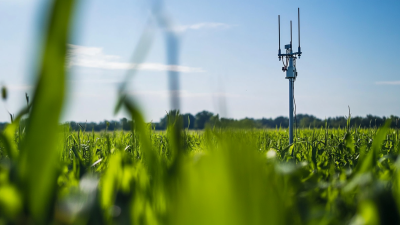






 The application of RTK GPS technology is transforming various industries through enhanced precision tracking. According to a report by MarketsandMarkets, the global RTK GPS market is expected to grow from USD 2.18 billion in 2021 to USD 3.57 billion by 2026, driven primarily by the increasing adoption of precision agriculture, surveying, and autonomous vehicles. In agriculture, for instance, farmers utilize RTK GPS for activities such as planting, field mapping, and crop monitoring, enabling them to achieve accuracy levels of 2.5 cm or better. This high precision not only boosts productivity but also minimizes resource wastage.